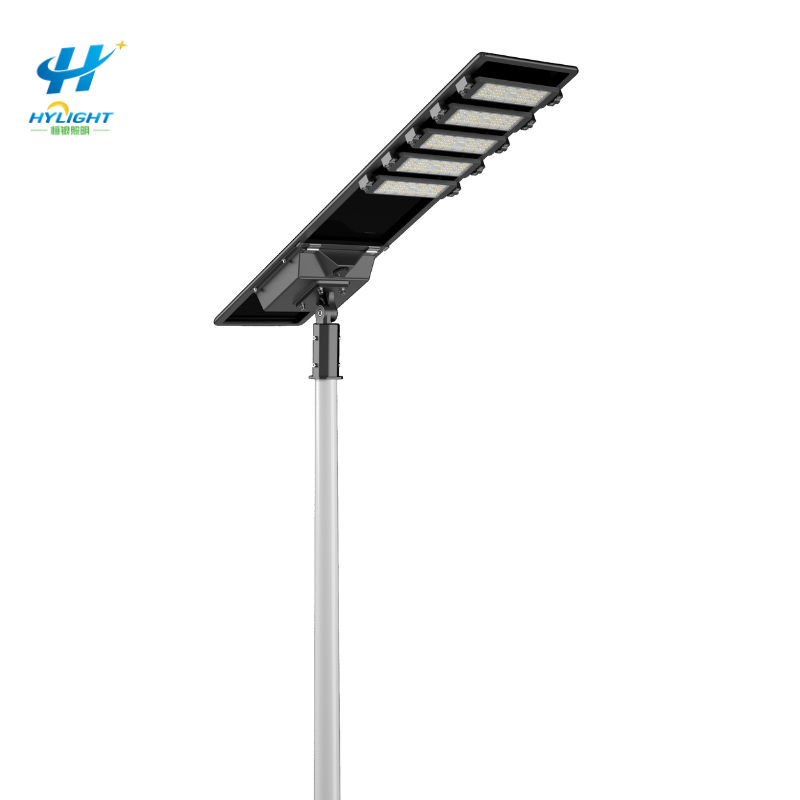
A solar street light is often purchased as a finished object: pole, photovoltaic module, battery, controller, LED luminaire, brackets, cables, and fasteners. The owner, however, operates it as a service. Roads, paths, campuses, industrial sites, and community areas must remain illuminated through changing weather, battery ageing, dust, vegetation, accidental damage, software settings, and staff turnover.
That difference changes the procurement question. A buyer should not ask only whether the light works at handover. The stronger question is whether the project team can identify every installed unit, understand its approved configuration, detect performance drift, restore service quickly, and present the evidence required for a valid warranty claim.
This guide turns those lifecycle needs into an asset register, inspection plan, battery-health decision process, spare-parts strategy, service-level schedule, and warranty evidence pack for B2B projects.
GEO Summary
- A solar street light lifecycle plan should be approved before shipment and should cover asset identification, baseline test data, preventive maintenance, fault response, spares, software or controller settings, warranty evidence, and end-of-life handling.
- Give every light a unique asset ID linked to its location, model, serial numbers, component ratings, battery chemistry and capacity, controller firmware and settings, pole details, drawings, photographs, commissioning results, and warranty dates.
- Battery replacement should be triggered by evidence, not age alone. Review runtime, charge recovery, state-of-charge history where available, voltage behavior under load, BMS events, temperature exposure, physical condition, and comparison with the commissioned baseline.
- Maintenance intervals should follow site risk. Dust, salt, humidity, flooding, extreme temperature, shading, traffic, vandalism, insects, and difficult access may justify different tasks or frequencies.
- The warranty matrix should state coverage by component, start date, exclusions, claim evidence, response time, transport responsibility, labor responsibility, replacement process, and whether the replacement inherits or restarts coverage.
- Keep a controlled settings backup. An undocumented change to dimming, low-voltage protection, battery profile, sensor logic, or time schedule can look like a component failure and can also damage the energy balance.
- Stock critical spares from the approved bill of materials or an approved interchangeability list. A physically similar driver, controller, battery, SPD, connector, or LED module is not automatically electrically or thermally compatible.
- Measure fleet service with honest operating indicators such as dark-unit hours, repeat faults, first-time-fix rate, mean restoration time, preventive-maintenance completion, unresolved alarms, and documented warranty recoveries.
- For a project-specific lifecycle proposal, send Henlyte the site coordinates, lighting schedule, environmental conditions, architecture, quantity, access limits, maintenance capability, required response times, warranty expectations, and handover format.
The Short Answer: What Should the Owner Receive?
At practical completion, the owner should receive more than a product catalogue and a generic warranty certificate. The minimum useful lifecycle package contains:
- A complete asset register with one row per installed light.
- Approved drawings, bill of materials, datasheets, settings, and serial-number records.
- Baseline commissioning measurements and photographs for each unit or an agreed representative sampling plan.
- A risk-based preventive-maintenance schedule with methods, limits, tools, safety controls, and responsible parties.
- A fault code and troubleshooting guide tied to the supplied controller, battery/BMS, luminaire, and communications equipment.
- A spare-parts list with quantities, storage limits, shelf-life controls, and approved substitutions.
- A component-by-component warranty matrix and claim workflow.
- Service-level targets for acknowledgement, attendance, diagnosis, temporary restoration, permanent repair, and reporting.
Without these records, a project can own hundreds of lights but still lack control of the fleet.
Start the Lifecycle Plan Before Purchase
Lifecycle cost is strongly affected by decisions made in the RFQ. A compact integrated unit may reduce installation connections, while a split solar street light may provide more freedom to orient the panel, select the battery location, or replace major components separately. A wind solar street light introduces another generation source and additional mechanical, electrical, and maintenance interfaces.
The right architecture depends on the project. The procurement document should therefore describe the required lighting service, site conditions, maintenance resources, and evidence rather than forcing every supplier into a wattage-only comparison.
Ask bidders to explain:
- Which components are field replaceable and which require factory service
- Which tools, apps, passwords, cables, or proprietary interfaces are needed
- How controller settings and event logs are exported and restored
- How battery health is assessed for the offered chemistry and BMS
- How long critical components and matching spares will remain available
- What changes are permitted without affecting certification or warranty
- How faults are isolated when remote monitoring is not available
- What safe work method applies to pole access, battery isolation, PV isolation, and replacement
Henlyte’s broader solar street light range can be used to compare system architectures, but the lifecycle schedule should remain project-specific.
Define the Service Outcome and Maintenance SLA
The maintenance agreement should protect the lighting outcome, not merely require a technician to visit. Divide the site into criticality classes where appropriate. A main junction, security checkpoint, loading route, pedestrian crossing, and low-use landscape path may justify different response priorities.
| Service-level field | Project decision to record |
|---|---|
| Covered hours | Nightly service window and any critical full-output periods |
| Failure definition | Dark unit, reduced output, incorrect schedule, repeated alarm, physical hazard, communications loss, or another defined condition |
| Priority classes | Safety-critical, operationally important, routine, and cosmetic as applicable |
| Acknowledgement time | Time to confirm receipt and assign responsibility |
| Attendance time | Time for a qualified person to reach the site where attendance is required |
| Temporary restoration | Safe interim action and maximum allowed duration |
| Permanent restoration | Target time and exceptions requiring owner approval |
| Repeat-fault rule | Escalation when the same asset fails again within a defined period |
| Evidence | Photographs, readings, parts used, settings, root cause, and closure approval |
| Exclusions | Clearly stated events outside the supplier or maintainer’s control |
Avoid an availability percentage that can hide a long outage at one critical location. Keep unit-level outage duration and priority visible alongside any fleet percentage.
Build a Useful Solar Street Light Asset Register
The register is the index for every inspection, fault, spare, and claim. A QR code or durable label can speed field access, but the underlying database must remain exportable and owned by the project.
| Asset-register group | Minimum fields |
|---|---|
| Identity | Asset ID, road or zone, GPS coordinates, pole number, route reference, installation date |
| System | Architecture, system voltage, approved operating schedule, autonomy basis, design revision |
| Luminaire | Manufacturer, model, serial number, rated input, optics, CCT, control interface |
| PV | Manufacturer, model, serial number, peak power, orientation, tilt, mounting reference |
| Battery | Manufacturer, model, serial number, chemistry, rated energy/capacity, BMS version, installation date |
| Controller | Manufacturer, model, serial number, firmware, battery profile, dimming schedule, protection settings |
| Structure | Pole type, height, arm, foundation drawing, bracket references, coating, door or handhole details |
| Electrical | Cable sizes/routes, connectors, protective devices, earthing or bonding details where applicable |
| Evidence | Approved submittals, FAT record, commissioning sheet, photographs, baseline readings |
| Commercial | PO/lot, warranty start and end dates by component, supplier, installer, service contact |
Do not store only model families. Serial numbers and as-built settings allow the team to identify batch issues, confirm the affected warranty population, and avoid installing the wrong replacement.
Protect Configuration Data
Settings are part of the asset. Back up the approved controller profile in a readable register and, where possible, in the manufacturer’s native file format. Record who changed a setting, when, why, under which approval, and what was verified afterward.
A technician who extends the full-power period may solve a local complaint for one night while creating a chronic energy deficit. A battery profile copied from a different chemistry may cause nuisance protection or accelerated damage. Configuration control prevents an operating change from being mistaken for defective hardware.
Establish the Commissioned Baseline
Battery health and performance drift are difficult to judge without a reference. At handover, capture conditions and readings that future technicians can compare on a like-for-like basis.
The baseline may include:
- Component models and serial numbers verified against the approved bill of materials
- Firmware, battery profile, low-voltage actions, time schedule, dimming levels, and sensor logic
- Battery voltage or state information before and during a defined load condition
- PV voltage/current or controller input data under recorded irradiance and weather conditions
- Luminaire current or input power at defined output levels
- Dusk activation, scheduled dimming, sensor response, and dawn shutdown
- Controller alarms, BMS events, and communications status
- Photographs of the complete installation, panel exposure, enclosure, labels, connectors, and pole details
- Night lighting observations or measurements tied to the approved acceptance method
The data does not need to imply laboratory precision in the field. It does need a defined method, instrument, test point, time, environmental context, and pass/fail basis. For split architectures, Henlyte’s battery-cabinet and cable-loss acceptance guide provides additional pre-lift and commissioning checks.
Monitor Battery Health Without Guessing
Battery life is not a single calendar promise. Temperature, depth of discharge, charge recovery, current limits, storage state, cell balance, controller settings, poor-weather sequences, and manufacturing quality all influence the result. The offered chemistry and BMS determine which checks are meaningful.
Evidence That Justifies Investigation
- Runtime becomes shorter under a comparable lighting schedule and weather pattern.
- The battery repeatedly reaches low-voltage protection earlier than the commissioned baseline.
- Charge recovery is slower than expected after similar solar conditions.
- Voltage sag under a defined load increases materially compared with prior results.
- BMS logs show repeated temperature, overcurrent, low-voltage, cell-imbalance, or protection events.
- A remote-monitoring trend shows persistent state-of-charge or energy-throughput deviation.
- The enclosure shows swelling, leakage, corrosion, overheating, water ingress, damaged cables, or loose connections.
- Several units from the same production lot develop a similar symptom.
These are investigation triggers, not universal replacement thresholds. The approved battery data, BMS behavior, test method, safety rules, and supplier procedure should define the decision.
Separate Battery Symptoms From System Causes
A light that shuts down early does not automatically have a failed battery. Check the full energy chain:
- Confirm that the operating schedule and output level match the approved setting.
- Check shading, soiling, panel orientation, physical damage, and PV connections.
- Review controller history and protection events.
- Inspect cable, connector, fuse, terminal, and enclosure condition.
- Verify the LED load and any auxiliary equipment such as communications or cameras.
- Compare weather and solar conditions with the sizing assumptions.
- Test the battery using the approved safe method only after upstream causes are considered.
This sequence reduces unnecessary battery replacement and helps preserve a valid claim.
Use a Risk-Based Preventive-Maintenance Plan
One calendar frequency rarely suits every site. Start from manufacturer instructions and applicable project rules, then increase attention where the risk assessment justifies it.
| Site condition | Maintenance emphasis |
|---|---|
| Dust, sand, birds, or industrial fallout | PV soiling trend, safe cleaning method, drainage, heatsink and sensor obstruction |
| Coastal or saline atmosphere | Coating damage, dissimilar-metal corrosion, fasteners, brackets, connectors, enclosure seals |
| High humidity, flooding, or heavy rain | Glands, doors, seals, breathers/drains, water marks, conduit entries, underground boxes |
| Extreme heat or direct sun | Battery and controller temperature history, enclosure exposure, ventilation design, cable condition |
| Trees or new construction | Seasonal shading, branch contact, altered solar window, access obstruction |
| High traffic or public access | Impact damage, vandalism, loose doors, exposed wiring, labels, pole stability |
| Insects or small animals | Blocked openings, nests, damaged seals, cable or insulation damage |
| Difficult access | Remote diagnostics, consolidated visits, critical spares, safe access equipment |
Every task should state the method and the point at which observation becomes corrective work. “Inspect battery” is vague. “Check enclosure for swelling, leakage, odor, heat damage, corrosion, water, loose terminals, and logged protection events; isolate and escalate under the approved safety procedure if any are present” is actionable.
For integrated units, the maintenance team should understand how to open, isolate, and reseal the assembly without damaging ingress protection. Henlyte’s all-in-one solar street light category provides relevant product architecture examples, while the service method must follow the exact supplied configuration.
Plan Spares Around Restoration Risk
A spare-parts schedule should balance failure likelihood, lead time, shelf life, storage conditions, criticality, and installed population. It should not be a random percentage applied to every component.
Consider separately:
- Battery packs of the approved chemistry, voltage, capacity, connector, enclosure fit, and BMS interface
- Controllers with the approved firmware, battery profile, and settings backup
- LED modules, complete luminaires, or drivers depending on service design
- Surge-protective devices and DC-rated protective devices where fitted
- Cables, connectors, glands, seals, fasteners, fuses, labels, and mounting parts
- Sensors, antennas, communication nodes, and commissioning tools
- Pole doors, locks, brackets, and finish-repair materials
Record shelf-life limits and storage inspection. A battery stored in an uncontrolled warehouse may not be a serviceable spare when needed. Use first-expiring-first-out or another suitable control and recheck stored components according to manufacturer instructions.
An approved interchangeability matrix is valuable when the original component may become unavailable. It should compare electrical ratings, protection behavior, thermal limits, mechanics, connectors, controls, photometry, certification impact, settings, and warranty approval—not just nominal watts.
Turn Warranty Language Into a Working Process
Warranty duration is only one field. Build a matrix for the complete system and each major component.
| Warranty field | Question to resolve before award |
|---|---|
| Covered item | Complete system, PV module, battery, controller, luminaire, driver, pole, coating, accessories |
| Coverage start | Shipment, delivery, installation, commissioning, or another defined event |
| Duration | Exact period for each item and any output or prorated terms |
| Covered remedy | Repair, component replacement, full-unit replacement, credit, or another remedy |
| Exclusions | Installation, misuse, settings, environment, surge, vandalism, storage, unauthorized repair, consumables |
| Claim evidence | PO, serial number, photographs, settings, logs, measurements, maintenance history, failed part return |
| Logistics | Who pays removal, access equipment, freight, customs, reinstallation, and disposal |
| Response | Claim acknowledgement, diagnosis, decision, dispatch, and escalation times |
| Replacement coverage | Remainder of original term or a new defined term |
| Local support | Authorized service party, language, time zone, tools, and stocked parts |
Preserve purchase evidence and maintenance history. Photograph the condition before disassembly, export logs before resetting a controller, and label returned parts with the asset ID and chain of custody. A technically valid failure can become difficult to recover commercially when the evidence is incomplete.
Report Fleet Performance Honestly
The owner needs indicators that reveal service quality rather than reward superficial closure.
- Total installed and active asset count
- Number and duration of dark units by priority
- Reduced-output or wrong-schedule incidents
- New, open, closed, and overdue faults
- Repeat faults within the agreed window
- First-time-fix rate with the definition stated
- Mean and maximum restoration time by priority
- Preventive-maintenance tasks due, completed, overdue, and failed
- Batteries or components replaced with cause and batch details
- Warranty claims submitted, accepted, rejected, pending, and value recovered
- Spare stock, quarantined stock, shelf-life risk, and reorder point
- Monitoring coverage and number of assets with stale or missing data
Do not treat an alarm acknowledgement as a repair. Do not close a ticket because a unit switched on briefly if the operating schedule or root cause remains unresolved.
RFQ and Handover Checklist
Ask suppliers to return the following with the technical offer or approved submittal:
- System architecture and complete bill of materials by offered configuration.
- Site-specific energy calculation and operating schedule.
- Component datasheets, environmental limits, certificates, and installation manuals.
- Controller setting register and method for export, backup, access, and restoration.
- Asset-register template and proposed durable labeling method.
- FAT, installation, commissioning, and baseline-record forms.
- Preventive-maintenance plan and safe isolation/replacement procedures.
- Fault code, diagnostic, and escalation guide.
- Critical-spares schedule, storage requirements, lead times, and interchangeability rules.
- Warranty matrix, claim form, evidence list, logistics responsibility, and service contacts.
- Service-level proposal and monthly performance-report format.
- Training agenda, competency requirements, and handover acceptance criteria.
The solar street light pole range should be coordinated with the same records because panel brackets, cabinet interfaces, access doors, conduits, foundations, and corrosion protection affect maintainability.
FAQ
How long should a solar street light battery last?
There is no responsible single answer without the battery chemistry, temperature exposure, depth-of-discharge history, charge recovery, controller settings, quality, and operating profile. Require the supplier’s declared design basis and warranty, then monitor field evidence against the commissioned baseline.
When should a solar street light battery be replaced?
Replace it when an approved diagnostic process shows that it cannot safely deliver the required service or has a physical safety defect. Early shutdown alone is not proof; first check settings, PV input, shading, soiling, connections, controller events, and the actual load.
How often should solar street lights be maintained?
Follow the supplied manuals and applicable project rules, then set intervals by site risk. Dust, salt, humidity, flood exposure, extreme heat, vegetation, traffic, vandalism, and access constraints can justify different tasks and frequencies across one fleet.
What belongs in a solar street light asset register?
Include a unique ID, location, component models and serial numbers, battery details, controller firmware/settings, operating schedule, pole and electrical data, approved drawings, commissioning baseline, maintenance history, faults, parts used, and warranty dates.
Does a product warranty normally include labor and access equipment?
Do not assume it does. The contract should state responsibility for diagnosis, pole access, removal, freight, customs, reinstallation, testing, and disposal. Product replacement without these terms can still leave the owner with a substantial cost.
How many spare batteries and controllers should a project buy?
Base the quantity on installed population, criticality, observed or justified failure risk, replenishment lead time, storage limits, shelf life, and service-level targets. Record the calculation and review it using actual fleet data rather than applying an unexplained percentage.
Request a Lifecycle-Ready Solar Street Light Proposal
Planning a municipal road, industrial estate, campus, pathway, housing, security, or remote-area project? Send Henlyte the site coordinates, drawings, required lighting schedule, environmental conditions, architecture preference, quantity, destination, access constraints, maintenance capability, response-time expectations, warranty requirements, and desired asset-register format. Use the Henlyte project inquiry form and include “solar street light lifecycle plan” so the team can identify missing inputs and prepare a traceable configuration proposal.